
Recommended Books for Film Composers (2026 Update)
Jun 23, 2026
All articles were written by Team Behind the Score. Some parts of the writing were polished with the help of AI to improve readability.

Our content relies on support from our readers. If you click some of the links below and make a purchase, we may receive a small commission at no extra cost to you.
Please note that this selection focuses on the theoretical aspects of music composition. Books specifically addressing technical film-scoring topics such as spotting, synchronization, and related production workflows are not the primary focus of this list.
Introduction
Yes, in an era flooded with information on the internet, books may appear to be an old-fashioned method of studying. However, books remain our favorite means of acquiring knowledge, particularly when it comes to subjects that require in-depth exploration and dedicated time and effort. Despite the prevalence of video content, books possess unique strengths that make them invaluable in the pursuit of knowledge.
Book vs Video
One significant strength of books is their status as proven sources of information, unlike random YouTube tutorials or online videos. The books that we are about to introduce have stood the test of time and have been validated by numerous individuals. They have undergone scrutiny, editing, and review processes that ensure their reliability and accuracy.
Moreover, books offer a distinct advantage by allowing you to stay focused on a single topic without the distractions inherent in videos. Unlike YouTube videos with enticing thumbnails and the constant temptation to click on related content, books enable you to sit in one place and immerse yourself in a subject without diverting your attention elsewhere.
In summary, despite the rise of video content, books retain their appeal and value in an era of information overload. Their proven reliability, validated by countless individuals, and their ability to keep you focused on a single topic make books an enduring and essential resource for deepening your knowledge.
Below, we have compiled a selection of highly recommended books tailored specifically for composers, with a special emphasis on those working in media music and film composition.
Books for film composers
Behind Bars: The Definitive Guide to Music Notation
Author: Elaine Gould
Publisher: Faber Music (January 20, 2011)
Hardcover: 704 pages
Language: English
Publication year: 2011
An indispensable reference covering everything from basic notation conventions to complex instrumental techniques, score layout, and part preparation.
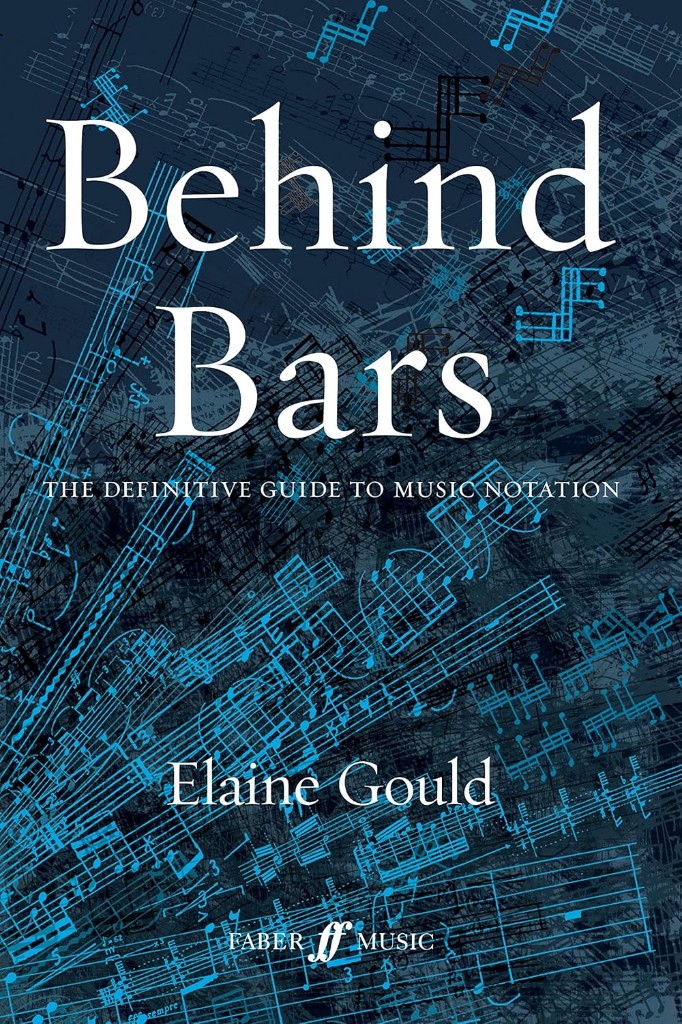
If you prepare scores for players — whether by hand or in notation software — Elaine Gould’s Behind Bars is the kind of book that quickly becomes a permanent fixture on the desk. It covers far more than the usual basics: accidentals, dynamics, articulation, metre, and tuplets, then moves into idiomatic notation for woodwind, brass, percussion, keyboard, harp, guitar, strings, and voice, along with practical guidance on score layout and part preparation. With around 1,500 examples drawn from published scores spanning Bach to Xenakis, it is widely regarded as the definitive modern guide to music notation. (If you’re looking for something shorter first, Mark McGrain’s Music Notation later on this list is a lighter companion — but once notational questions start getting more specific, this is usually the book people reach for.)
On the Track: A Guide to Contemporary Film Scoring
Author: Fred Karlin, Rayburn Wright
Publisher: Routledge; 2nd edition (January 8, 2004)
Paperback: 560 pages
Language: English
Publication year: 1995
This comprehensive guide covers everything you need to know about the craft of film scoring, from the basics of music theory and composition to the more technical aspects of working with film crews and recording studios.

If you’re interested in a career in film scoring, then we have no doubt that you’ve probably heard of this book (or maybe it’s already on your bookshelf). This comprehensive guide covers everything you need to know about the craft of film scoring, from the basics of music theory and composition to the more technical aspects of working with film crews and recording studios.
The book is divided into two parts. The first part covers the basics of film scoring, including the history of film music, the different types of film music, and the role of the film composer. The second part is more technical and covers topics such as spotting, synchronization, and orchestration.
One of the strengths of On the Track is that it is written by two experienced film composers. Karlin and Wright have both worked on a wide range of films, and they bring their wealth of experience to the book. They offer clear and concise explanations of the technical aspects of film scoring, and they provide helpful advice on how to get started in the industry.
(Sidenote: Inside the Score by Rayburn Wright, published by Kendor Music Publishing, is an extraordinary resource and a definitive guide for those passionate about delving into the study of big band jazz.)
The only downside to On the Track is that it was published in 1990. As a result, some of the information in the book is now outdated. However, the vast majority of the information remains relevant, and it is still a valuable resource for anyone interested in film scoring. Also, the book does not come with any audio tracks, but you can find many of the examples discussed in the book on other sources such as YouTube.
The Art of Film Music by George D. Burt
Author: George D. Burt
Publisher: Northeastern University Press
Paperback: 288 pages
Language: English
Publication year: 1995
The pages are enriched with detailed discussions of iconic scores from memorable scenes in films like The Best Years of Our Lives, Laura, and East of Eden.

This book delves into the significant role and profound impact of music in film by analyzing various scenes from classic movies spanning the 1930s to the 1980s. The author thoroughly examines both the practical and aesthetic aspects of film scoring, drawing on the insights of esteemed composers such as Hugo Friedhofer, Alex North, David Raksin, and Leonard Rosenman. The pages are enriched with detailed discussions of iconic scores from memorable scenes in films like The Best Years of Our Lives, Laura, and East of Eden. Additionally, the book serves as a technical guide for composing film music, covering topics such as the spotting process, timing, synchronization, and general compositional approaches. It’s worth noting that the book does not include any audio tracks, most likely due to copyright considerations.
View The Art of Film Music on Amazon
Principles of Orchestration by Nikolai Rimsky-Korsakov
Author: Nikolai Rimsky-Korsakov
Published: June 1, 1964 by Dover Publications
Language: English
Paperback: 512 pages
First published: July 15, 1922
This book provides valuable insights into topics such as tonal resonance, voice combination, effective utilization of tutti effects, and more.

The Principles of Orchestration, authored by Rimsky-Korsakov, a renowned master of Late Romantic orchestration, serves as a comprehensive guide to arranging parts for either a string or full orchestra. This book provides valuable insights into topics such as tonal resonance, voice combination, effective utilization of tutti effects, and more. Many of the musical examples featured in the book are drawn from the author’s own compositions, including notable works like Scheherazade and Capriccio espagnol.
However, while we highly recommend this book and acknowledge its immense value, it may not be the most suitable initial resource for novice orchestrators. The Principles of Orchestration assumes that readers possess a solid understanding of music notation, orchestral instruments, and notation conventions. It is also worth noting that the book does not include any audio materials.
View Principles of Orchestration on Amazon
Modulation by Max Reger
Author: Max Reger
Publisher: Dover Publications; Illustrated edition (June 5, 2007)
Language: English
Paperback: 80 pages
Consider it an essential companion for your writing desk, providing quick and accessible references whenever needed.

Let’s diverge for a moment. While this book may not be exclusively focused on film scoring, it proves to be an exceptional resource for music theory in general. Have you ever encountered challenges when transitioning between different keys? Aptly named, this book is dedicated to the art of modulation and transposing from one key to another. With a focus on 100+ modulations using a 4-part voicing, this concise guide offers valuable insights into navigating key changes effortlessly.
Music Notation by Mark McGrain
Author: Mark McGrain
Publisher: Berklee Press (July 1, 1990)
Language: English
Paperback: 216 pages
This comprehensive book is a treasure trove of answers to the majority, if not all, of the notation questions you may encounter as a composer.

Pausing your creative flow while composing due to confusion over technical aspects of notation methods can be quite frustrating. Fortunately, this book is specifically designed to alleviate such situations.
This comprehensive book is a treasure trove of answers to the majority, if not all, of the notation questions you may encounter as a composer. It covers a wide range of subjects, including chord notation, dynamics (location of dynamic information), articulations (placement of accent, staccato), and various other crucial aspects essential for maintaining a professional and polished appearance in your musical scores. Whether you’re seeking guidance on proper notation techniques or aiming to enhance the overall professionalism of your compositions, this book is an indispensable resource that every composer should have in their collection.
The Study of Orchestration by Samuel Adler
Author: Samuel Adler
Publisher: W. W. Norton & Company; Fourth edition (June 1, 2016)
Language: English
Paperback: 1024 pages
This book goes beyond being a mere reference and is often regarded as a bible for composers across various genres, not limited to film music.

Samuel Adler’s The Study of Orchestration holds a prominent place on our list. Many readers of this article are already familiar with this renowned book. However, for those who are just starting their orchestration journey, it is an absolute must-have resource. Consider it a comprehensive guide that imparts essential knowledge, whether you are exploring the ranges and characteristics of different instruments, delving into specific notation methods, understanding timbre, or learning effective techniques for orchestrating your compositions, including considerations for doublings. This book goes beyond being a mere reference and is often regarded as a bible for composers across various genres, not limited to film music. Its invaluable insights make it an indispensable companion for anyone seeking to enhance their orchestration skills and craft remarkable musical works. And yes, this book comes with audio examples.
View The Study of Orchestration on Amazon
Behind the Score
Author: Jay Jonghyuk Lee, Tim Maurice, Robin Hall, Jaecheol Oh
Publisher: Amazon Kindle Direct Publishing (KDP)
Paperback: 228 pages
Language: English
Publication year: 2024
EDIT 2026: Now that we have published our own book (which we are very proud of), we would like to include it in this recommendation list.
The motto of the book is simple: “Turn theory into music.” Where many other books focus on teaching specific theoretical concepts in isolation, we took a more intuitive approach. Instead of asking “What is a modal interchange?”, for example, we frame topics around the sound you actually want to create — something closer to “Writing an ethereal, light, and dreamy sound using the Lydian mode.” The goal was always to bridge the gap between knowing the theory and writing music that feels right.
Thankfully, the book has received great praise and has been adopted by universities across the US and UK as both required reading and a supplementary resource. Institutions include the University of Westminster, the University of Liverpool, Johns Hopkins Peabody Institute, NYU, and Berklee College of Music, among others.
The physical copy of the book is available on Amazon.

Behind the Score — view the book on Amazon
A History of Film Music by Mervyn Cooke
Author: Mervyn Cooke
Publisher: Cambridge University Press
Paperback: 586 pages
Language: English
Publication year: 2008
A comprehensive survey of film scoring from the silent era to the present day, spanning Hollywood practices and international cinemas alike.
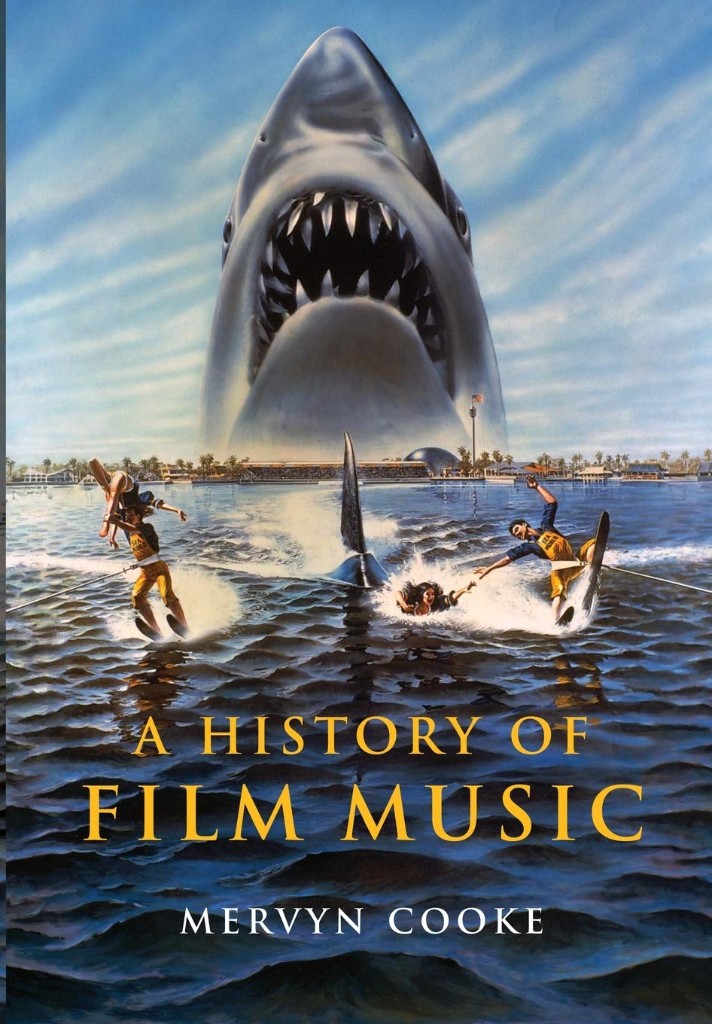
For a broader historical perspective beyond craft manuals, Mervyn Cooke’s A History of Film Music is an excellent place to turn. Cooke traces major developments from silent cinema through Hollywood’s Golden Age and into more recent decades, while also looking beyond the US to film music traditions in the UK, France, India, Italy, Japan, and elsewhere. Alongside wide-ranging overviews, the book offers readable, non-technical discussions of how image and soundtrack interact in individual films, with additional attention to documentary, animation, musicals, and the use of popular and classical music on screen. It is less a how-to composition guide and more a richly informed map of where film music has been — and why that history still matters to working composers.
View A History of Film Music on Amazon
Further recommendations
…and the list goes on. While we couldn’t include all our recommendations in full detail above, here is a concise list of additional books we highly recommend. In future posts, we will gladly share even more suggestions. Thank you for reading!
- Film Music: A Very Short Introduction by Kathryn Kalinak — an overview of the history and evolution of film music, exploring different styles and approaches used in film scoring.
- Audio-Vision: Sound on Screen by Michel Chion — while not specifically focused on composition, this book explores the intricate relationship between sound and image in film.
- Music Composition for Film and Television by Lalo Schifrin — insights into the creative process of composing music for visual media, covering melody, harmony, rhythm, and orchestration.
- Complete Guide to Film Scoring by Richard Davis — practical advice on composing for film, working with directors, and understanding the business side of film scoring.
- Scoring the Screen: The Secret Language of Film Music by Andy Hill — a deeper look at how music shapes emotional impact, including orchestration, thematic development, and collaboration.
- Creative Orchestration: A Project Method For Classes In Orchestration And Instrumentation by George Frederick McKay — an experiential, project-based approach to orchestration and instrumentation. Thanks to Randall Oelerich for recommending this book to us.