
What Is a Polyrhythm? Learn with Musical Examples
Sep 19, 2026
All articles were written by Team Behind the Score. Some parts of the writing were polished with the help of AI to improve readability.
Both polyrhythms and polymeters, as the names suggest, are techniques for combining two different rhythms played simultaneously in one musical moment. When two contrasting rhythms sound at the same time, the result can add rhythmic complexity and make the groove more elaborate and interesting. (If you want to learn how to use polymeter in writing, see Polyrhythm vs Polymeter? Learn from the Music of The Matrix by Don Davis.)
In this post, we’ll take a closer look at what polyrhythms are and how you can incorporate them into your music, accompanied by real-life musical examples.
What Is a Polyrhythm?
Polyrhythm involves combining two rhythms played at the same tempo within a song. Each rhythm follows its own individual subdivision pattern. For example, in the figure below, the Rhodes piano plays three quarter-note triplets while the bass plays two quarter notes within the same time span. This creates a 3-over-2 polyrhythm, where three triplets are played against the duration of two quarter notes. The Rhodes piano’s subdivision is based on quarter-note triplets, while the bass follows a subdivision of regular quarter notes.
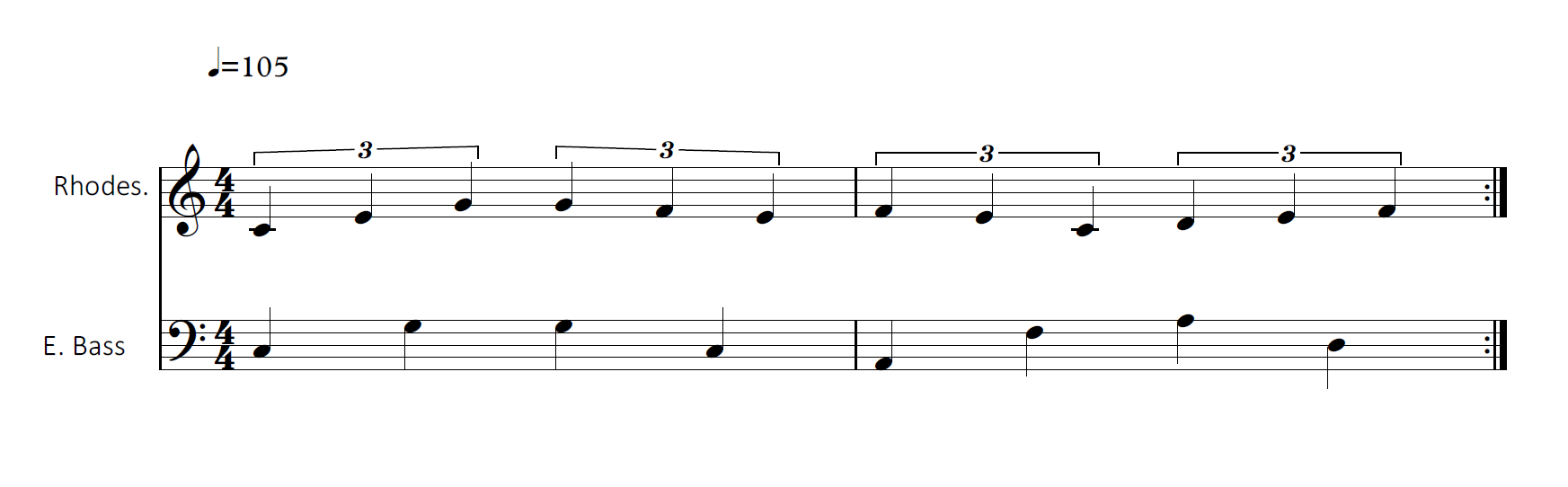
3:2 Polyrhythm
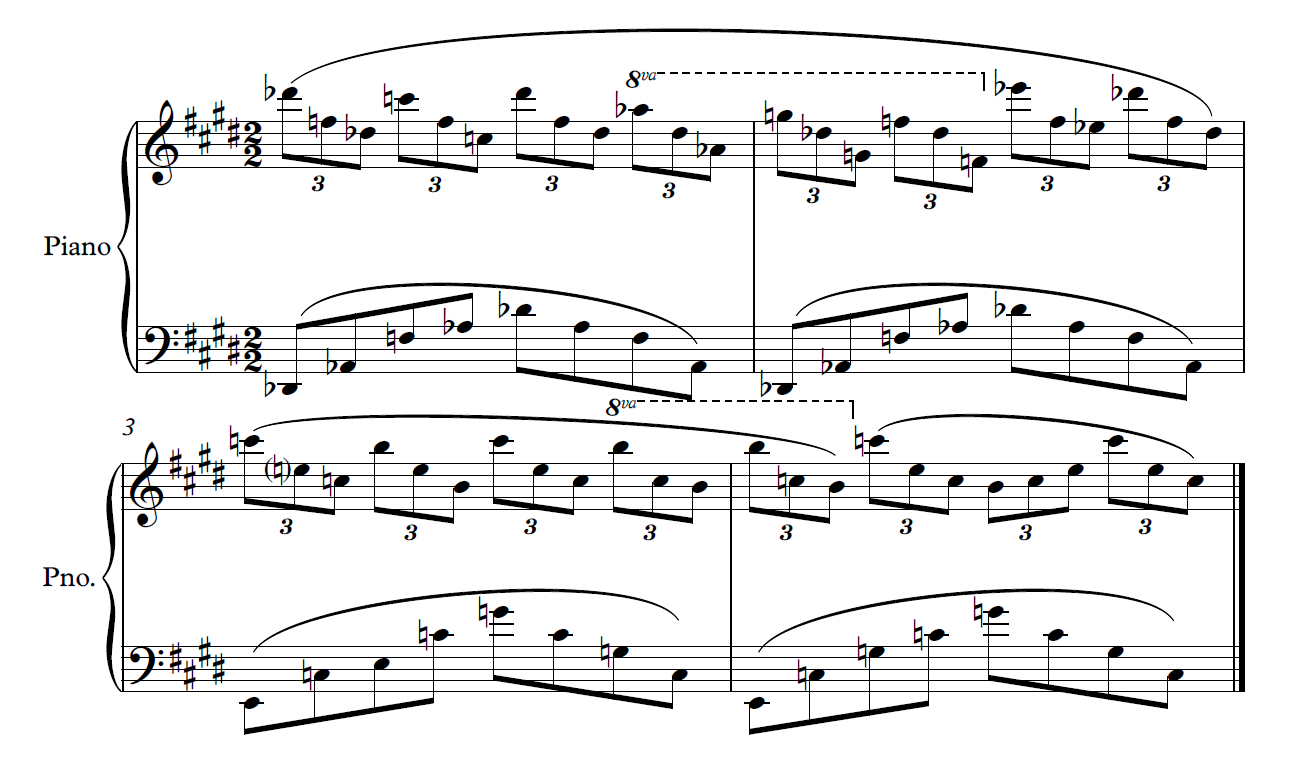
Ex. 1-A and Ex. 1-B are piano reductions of two of the most famous examples of 3:2 polyrhythm. Both demonstrate a triplet figure in the treble clef while regular eighth-note figures are played in the bass clef.
Ex. 1-A — Claude Debussy, “Deux Arabesques, L. 66 – No. 1 Andante con moto” (1888–1891) (piano reduction)
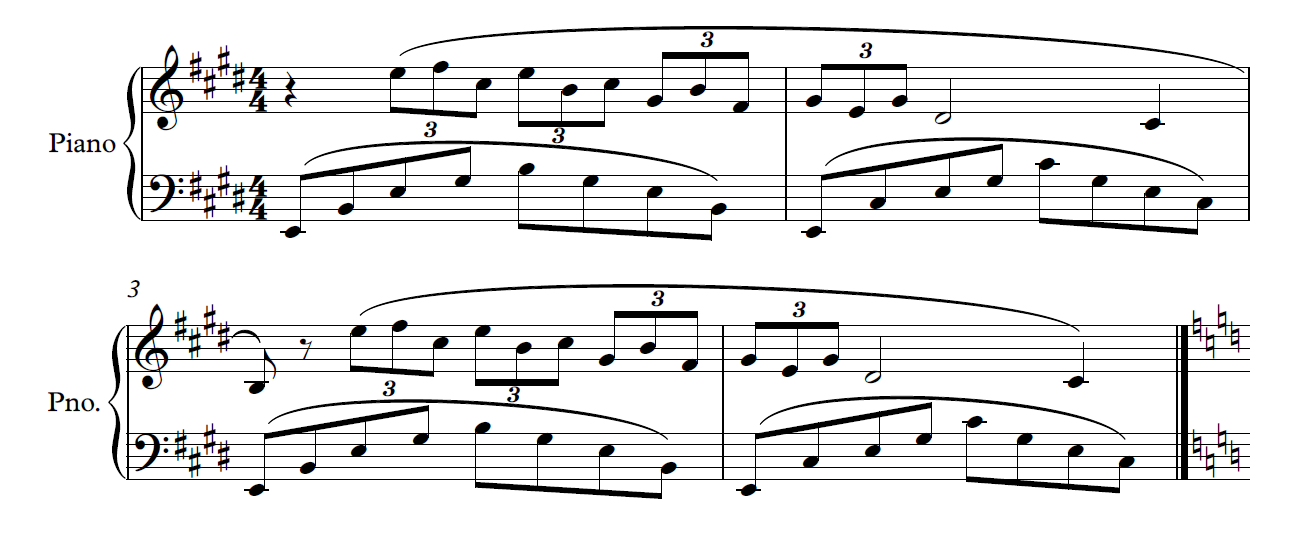
Ex. 1-B — John Williams, “Over the Moon,” from E.T. the Extra-Terrestrial (1982) (piano reduction)
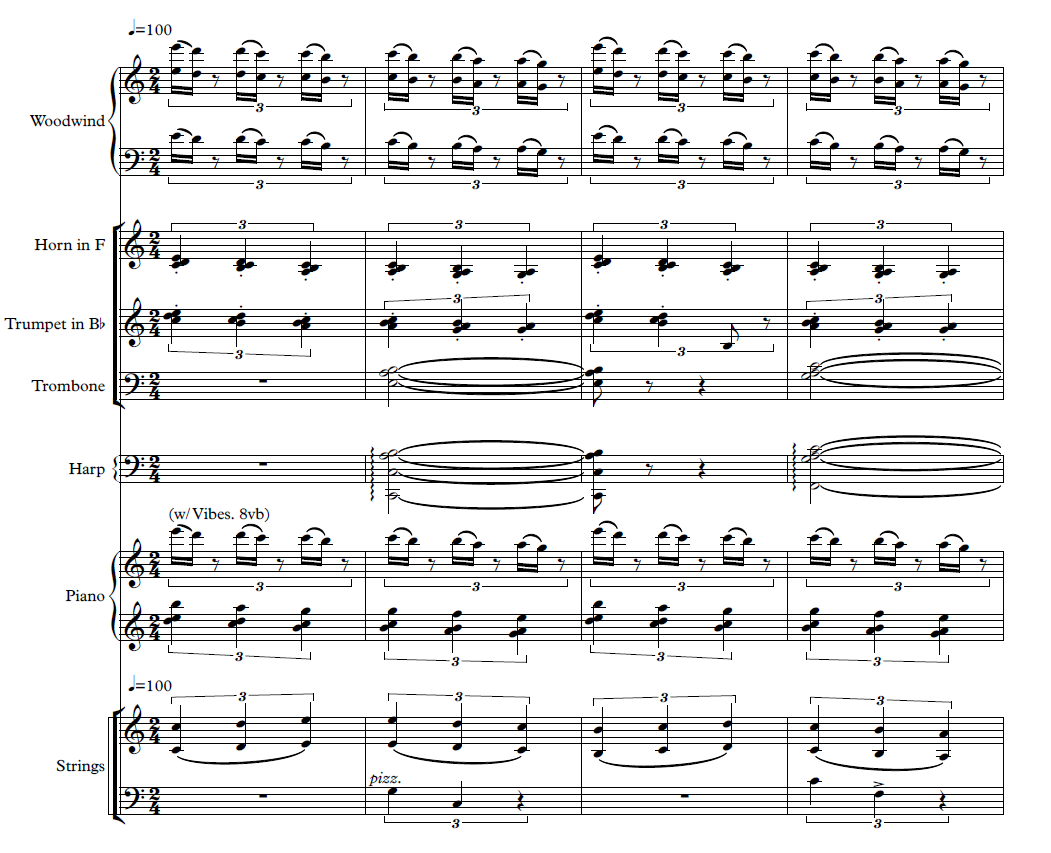
Polyrhythm in Ex. 2-A is similar to Ex. 1-A and 1-B, except Ex. 2-A has a quarter-note triplet figure played over the space of two quarter notes. The first four measures of the song sound in ¾, but between measures 5 and 8, contrabass notes in 2/4 can be heard. While the rest of the instruments provide a triplet-based waltz rhythm, sudden quarter notes in the bass give an unexpected offbeat moment, making the piece even more interesting. A mockup with a louder bass mix can be heard in Ex. 2-B.
Ex. 2-A — John Williams, “Harry’s Wondrous World,” from Harry Potter and the Philosopher’s Stone (2001)
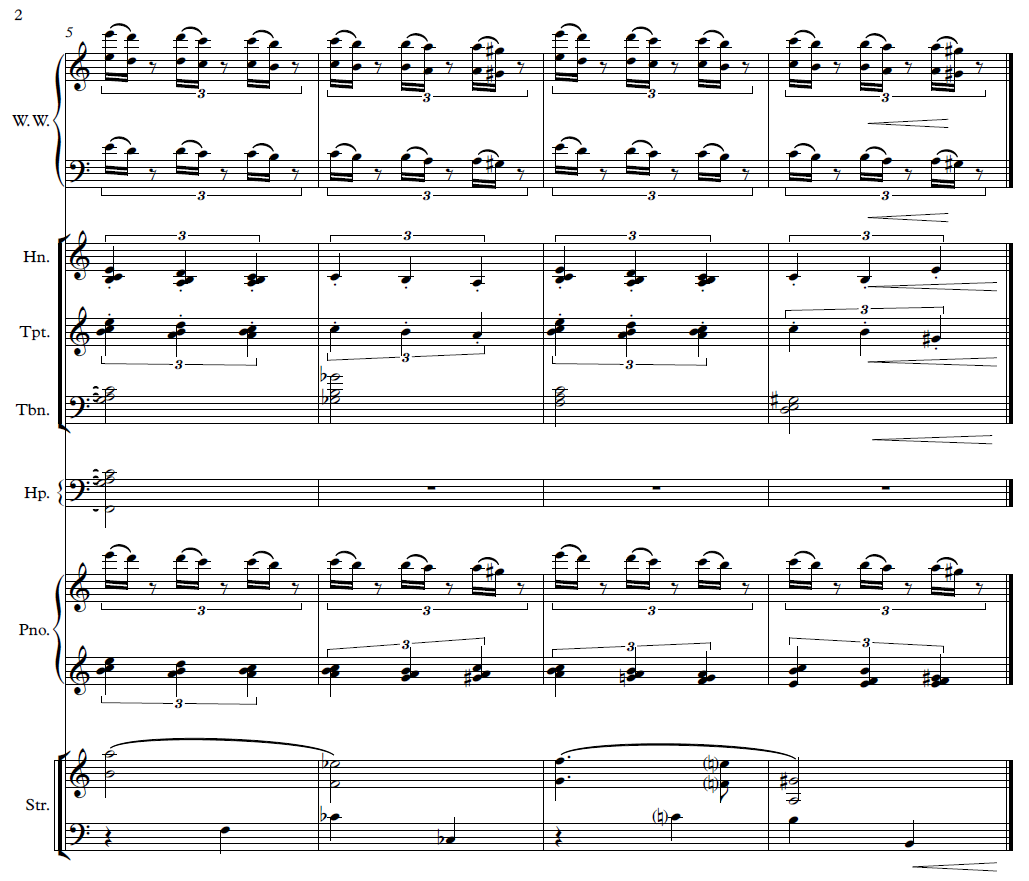
Ex. 2-B — Louder bass mix of Ex. 2-A
4:3 Polyrhythm
Examples 3-A and 3-B demonstrate polyrhythm figures used in modern musical styles. However, because one defining factor of polyrhythm is that two recurring rhythms periodically coincide, we’ve defined both examples as “quasi-polyrhythm.” Both still use two rhythmic subdivisions played simultaneously within a song, creating an intriguing rhythmic effect.
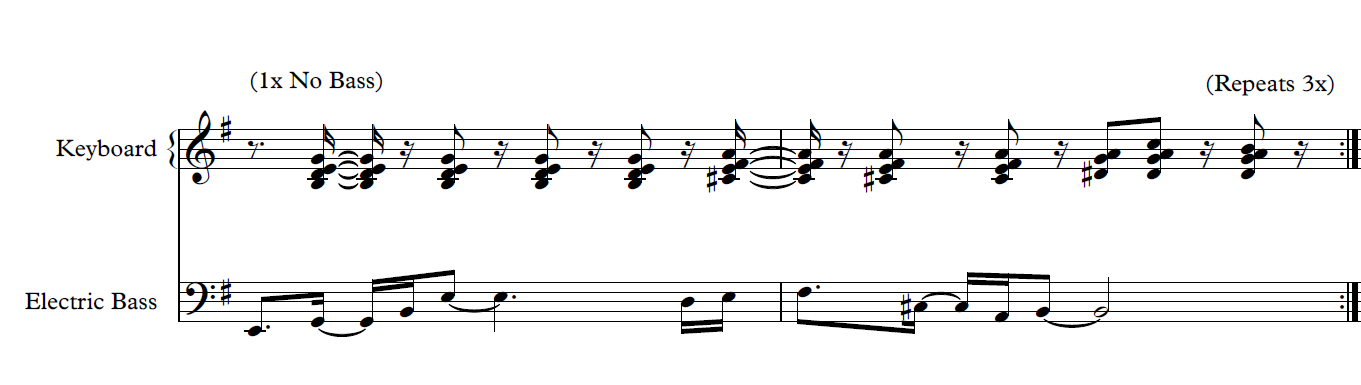
Ex. 3-A — Jamiroquai, “Cosmic Girl” (4:3)
Ex. 3-A is a short rearrangement of Jamiroquai’s mega-hit “Cosmic Girl,” demonstrating a 4:3 “quasi” polyrhythm. The keyboard plays a riff based on dotted-eighth subdivisions while bass and drums play a sixteenth-note-based rhythm. The keyboard riff continues only until the third beat of the second measure, as the riff plays the last two eighth notes to fit itself within the two-bar phrase. As seen in Fig. A, four dotted eighth notes were played simultaneously in the duration of three quarter notes.
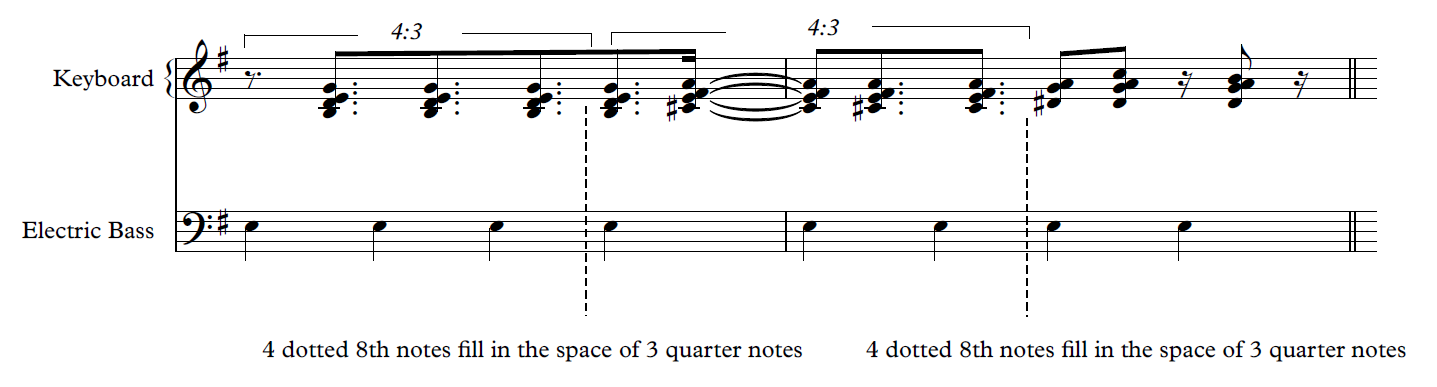
Ex. 3-B — 4:3 Quasi-polyrhythm pattern exercise
Similar to Ex. 3-A, Ex. 3-B demonstrates dotted-eighth figures played over a straight 4/4 rhythm. In the example, the kick drum keeps its own pulse with repetitive quarter-note beats. These contrasting rhythmic figures are easy to hear in today’s pop and EDM, where vocal or lead instruments play a dotted-eighth melody or motif against background instruments providing a steady eighth-note-based rhythm.
Closing
That’s pretty much it. We hope you found this article beneficial. There is a vast amount of material available on polyrhythms (and polymeters), so we encourage you to continue your research. We’ve also included a helpful YouTube video below that offers comprehensive insights into these concepts. Happy composing!