
Music of Oppenheimer – Ludwig Göransson
Sep 7, 2026
All articles were written by Team Behind the Score. Some parts of the writing were polished with the help of AI to improve readability.
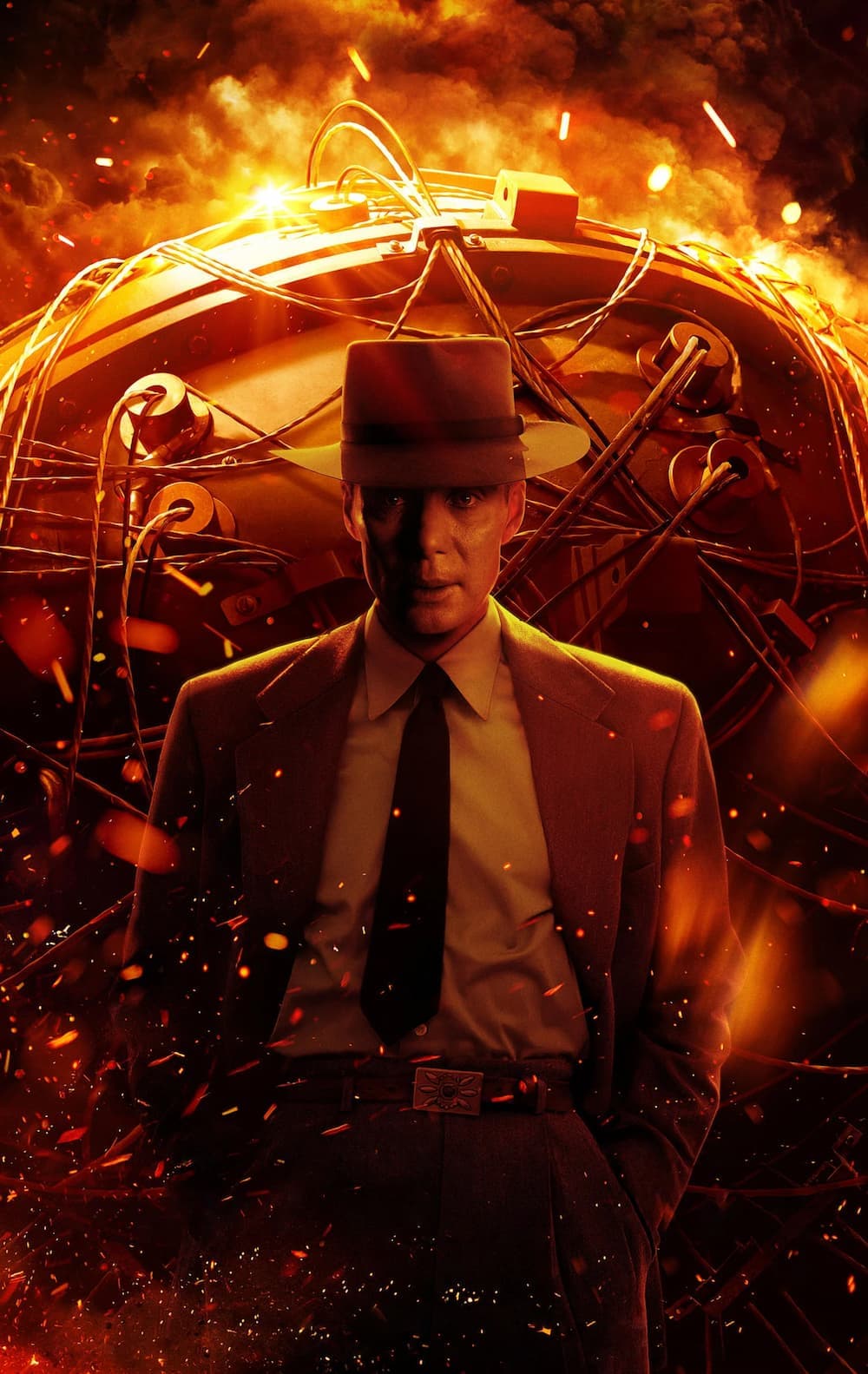
Rarely has a soundtrack so effectively reflected the intense psychological and moral tensions of scientific innovation as Ludwig Göransson’s score for Christopher Nolan’s Oppenheimer. The soundtrack emerges as a character in its own right, weaving an intricate musical narrative that explores the inner turmoil of J. Robert Oppenheimer, the theoretical physicist who became known as the “father of the atomic bomb.”
Ludwig Göransson: A Composer of Extraordinary Range
Before diving into the nuanced layers of the Oppenheimer soundtrack, it’s crucial to understand the musical genius behind the composition. Ludwig Göransson is a Swedish composer and music producer who has consistently pushed the boundaries of film scoring. His diverse portfolio includes groundbreaking work for Marvel’s Black Panther, The Mandalorian, and multiple collaborations with director Ryan Coogler.
Musical Philosophy and Approach
Göransson’s approach to the Oppenheimer soundtrack was deeply rooted in understanding the psychological complexity of scientific innovation. Unlike traditional historical drama scores, he sought to create a sonic experience that would mirror the protagonist’s internal conflict, the mathematical precision of scientific thought, and the terrifying potential of nuclear technology.
Crafting the Sound of Scientific Tension
Unconventional Instrumentation
The soundtrack distinguishes itself through its unconventional instrumental choices. Göransson deliberately selected instruments that could communicate both mathematical precision and emotional turbulence. Classical orchestral elements are intertwined with experimental techniques, creating a soundscape that feels simultaneously historical and timeless.
Minimalist Influences
Drawing inspiration from minimalist composers like Philip Glass and Steve Reich, Göransson constructed repetitive musical motifs that reflect the iterative nature of scientific research. These musical patterns evolve and transform, much like the scientific theories being explored in the film.
“Can You Hear the Music”
In the film: Early in Oppenheimer, Kenneth Branagh as Niels Bohr asks Cillian Murphy’s Oppenheimer, “Can you hear the music?” The screen erupts into a montage of swirling atoms, vibrant colors, and abstract visuals — a glimpse into Oppenheimer’s mind as he grasps quantum theory. Göransson’s track starts with a solo violin, then accelerates through 21 tempo changes, building to a frenetic orchestral climax. It’s a two-minute rollercoaster that mirrors Oppenheimer’s intellectual excitement, pulling viewers into his headspace with relentless energy.
Trivia: Göransson initially thought this piece would need to be recorded in segments due to its complexity. But Serena Göransson convinced him to try it in one take, using a new recording technique that let the orchestra shift tempos seamlessly. The result is a track that feels alive, almost chaotic, echoing Igor Stravinsky’s The Rite of Spring — a piece Nolan cited as inspiration after they attended a performance together.
Crafting a First-Person Soundtrack
A Score That Thinks Like Oppenheimer
What sets Oppenheimer apart from Göransson’s other works is its first-person perspective. Nolan wrote the script in the first person — a rare move for a screenplay — and Göransson mirrored that intimacy in the music. “You’re seeing the world through his eyes,” he told The Hollywood Reporter. The score doesn’t judge Oppenheimer; it feels what he feels, from the thrill of scientific discovery to the dread of its consequences. This approach required Göransson to dig deep, often pushing himself to uncomfortable emotional places to match the character’s complexity.
Three Movements, One Journey
The score unfolds in three distinct movements, each tied to a phase of Oppenheimer’s life. The first is lush and theoretical, with strings and piano evoking his early days as a physicist. The second shifts to the Manhattan Project, introducing thumping bass and metallic ticks to signal mounting stakes. The third, centered on the Atomic Energy Commission hearing, blends all these elements into a haunting reflection on legacy and guilt. Göransson avoided bombastic drums, letting the film’s explosions carry the weight while the music stayed introspective — a choice that makes the silence after the Trinity test all the more deafening.
Recording and Production Techniques
Innovative Sound Design
To achieve the unique sonic palette, Göransson employed innovative recording techniques. Traditional orchestral instruments were processed through electronic filters, creating sounds that felt both organic and artificially constructed — a metaphorical representation of nuclear technology itself.
Collaborative Process
Working closely with Christopher Nolan, Göransson developed a musical language that could communicate the intricate emotional and intellectual journey of J. Robert Oppenheimer without relying on conventional dramatic scoring.
Cue Highlights
“Fission”
In the film: As the film’s opening track, “Fission” sets the tone during the initial scenes of Oppenheimer’s student days in Europe. A solo violin weaves through lush strings and harps, reflecting his curiosity and isolation. The music swells as he meets Isidor Isaac Rabi, hinting at the connections that will shape his future. It’s intimate yet expansive, laying the emotional groundwork for the epic to come.
Trivia: “Fission” introduces the hexatonic scale that becomes Oppenheimer’s leitmotif — a six-note theme that recurs throughout the score. Göransson chose this scale for its versatility, allowing it to shift from hopeful to ominous depending on the context.
“Quantum Mechanics”
In the film: This track accompanies Oppenheimer’s time teaching at Berkeley, where he’s surrounded by eager students. It starts with a single violin as he lectures alone, then adds more strings as the classroom fills — four violins for four students, then a full orchestra as his ideas take hold. The music builds in rhythmic complexity, reflecting his growing influence and the excitement of quantum discovery.
Trivia: Göransson used this scene to play with dynamics, mirroring the film’s visual escalation. The idea came from Nolan’s script, which detailed how the music should grow with the crowd — a rare level of specificity that shows his hands-on approach to sound.
For more reading on craft resources, see our Recommended Books for Film Composers.
“Gravity Swallows Light”
In the film: During a quiet moment at Los Alamos, Oppenheimer gazes at the stars with his brother. The track features eerie synths and soft strings, evoking a sense of cosmic wonder tinged with foreboding. As the stars seem to collapse into a black hole on-screen, the music deepens, pulling viewers into a void of existential dread.
Trivia: This piece wasn’t originally written for this scene. Göransson repurposed it later for the post-Trinity speech, layering horror strings over the synths to heighten the tension — a testament to his knack for recycling themes with new emotional weight.
“Trinity”
In the film: The buildup to the Trinity test is pure sonic tension. “Trinity” layers ticking clocks, pulsing synths, and quivering strings as the team prepares to detonate the bomb. When the button is pressed, the music cuts to silence — a stark contrast that amplifies the explosion’s impact. It’s a masterclass in restraint, letting the visuals and sound design take over.
Trivia: Co-composed with Thomas Kotcheff, this track uses triplets — three notes in the space of two — to create a sense of urgency. Göransson avoided drums entirely, a choice he didn’t notice until watching the finished film.
“Destroyer of Worlds”
In the film: After the bomb drops, Oppenheimer recites the Bhagavad Gita line, “Now I am become Death, the destroyer of worlds.” This track blends a mournful violin with low, throbbing bass, capturing his realization of the horror he’s unleashed. The music lingers as the screen fades to black, leaving a heavy silence.
Trivia: The title comes directly from Oppenheimer’s famous quote, and Göransson used microtonal shifts in the violin to mimic the sound of radioactive decay — an unsettling nod to the bomb’s aftermath.
“American Prometheus”
In the film: The film’s closing moments feature this track, a reflective blend of strings and piano as Oppenheimer contemplates his legacy. It plays over visuals of rippling water and burning skies, tying together the score’s themes of creation and destruction. It’s a quiet, devastating coda to the story.
Trivia: Named after the biography by Kai Bird and Martin J. Sherwin that inspired the film, this piece was one of the last Göransson wrote, designed to echo the opening “Fission” theme with a darker twist.
“The Trial”
In the film: During the Atomic Energy Commission hearing, this track underscores Oppenheimer’s interrogation by Lewis Strauss (Robert Downey Jr.). Harps and violins create a mysterious, tense atmosphere, shifting to jagged strings as the stakes rise. It’s a sonic tug-of-war that mirrors the scene’s power struggle.
Trivia: Göransson assigned the harp to Strauss to contrast Oppenheimer’s violin, adding a layer of intrigue. The track’s 20-minute length was a request from Nolan, who needed a long, action-packed piece for the film’s third act.
“Los Alamos”
In the film: As Oppenheimer arrives at Los Alamos to build the bomb, this track introduces a hopeful yet ominous tone. Strings and piano give way to subtle synths, foreshadowing the project’s dual nature — scientific triumph and impending doom. It’s a pivotal shift into the score’s second movement.
Trivia: The stomping feet heard in the film were sent to Göransson by Nolan, who asked him to weave them into the music. They later became a recurring motif, especially in the hearing scenes.
“Something More Important”
In the film: In a tender moment between Oppenheimer and Kitty (Emily Blunt), this track features a delicate piano melody backed by soft strings. It’s a rare respite from the tension, highlighting their strained but enduring bond amidst the chaos.
Trivia: Also co-written with Thomas Kotcheff, this piece uses the piano to represent Kitty, creating a musical counterpoint to Oppenheimer’s violin. It’s one of the few tracks with a purely sentimental mood, clocking in at just 10% dark according to mood analysis.