
Motivic Development in Film Composition
Jul 21, 2026
All articles were written by Team Behind the Score. Some parts of the writing were polished with the help of AI to improve readability.

The art of film composition is a delicate dance between image and sound, where music serves as a powerful emotional catalyst, elevating storytelling to new heights. Unlike other genres of music, film scores are often inseparably tied to the narrative, themes, and characters of the film they accompany. One of the key techniques in film composition that allows composers to weave a score seamlessly into the fabric of the movie is motivic development. This involves taking a small musical idea, called a motive, and evolving it throughout the film to reflect the emotional and narrative progression. This technique, when skillfully employed, can create a profound sense of unity, coherence, and thematic richness, weaving a sonic tapestry that resonates deeply with audiences.
Understanding Motivic Development
A motive is a short, distinctive musical phrase or unit that serves as a building block for larger musical structures. It can be a simple melodic line, a rhythmic pattern, or even a harmonic progression. By repeating and developing this motive in various ways, composers can create a sense of familiarity and recognition, while also introducing elements of surprise and complexity. The technique of motivic development is not just about repetition but involves transforming the motive to reflect different moods, characters, or plot points.
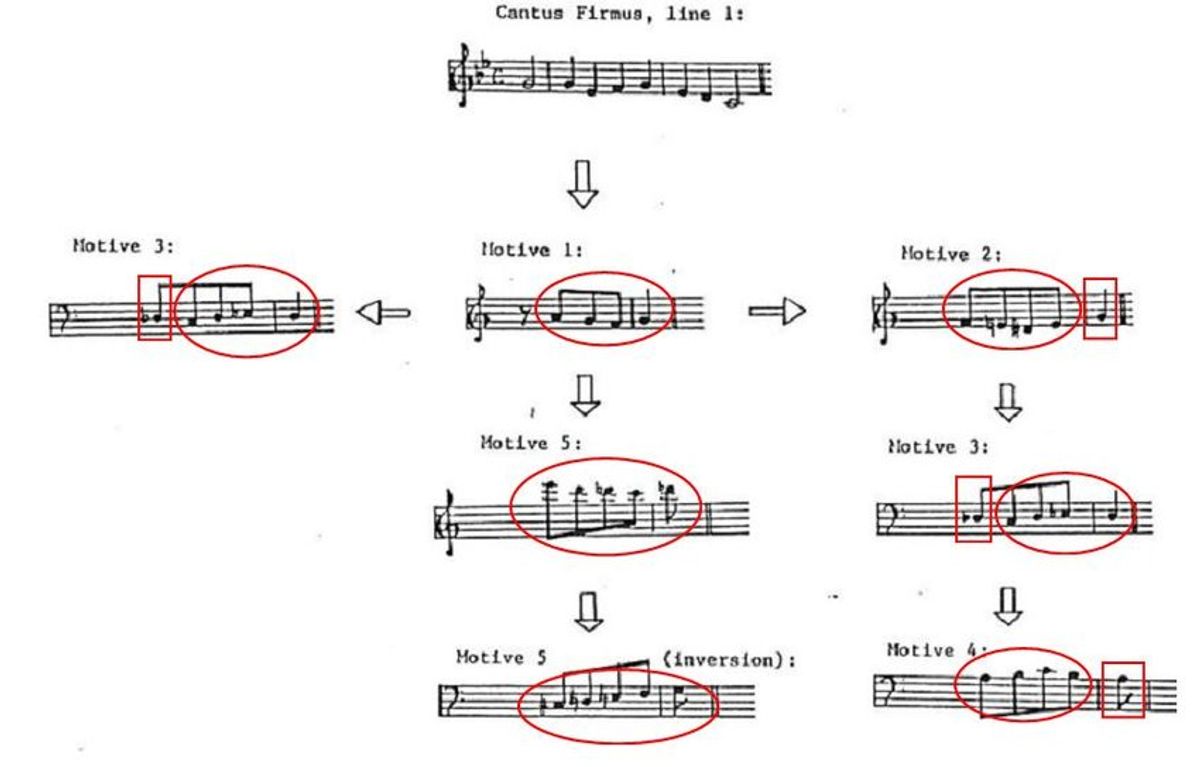
Motivic development can take many forms, including:
- Repetition: The motive is repeated verbatim or with slight variations.
- Variation: The motive is altered through changes in melody, harmony, rhythm, or instrumentation.
- Inversion: The motive is played upside down, creating a new melodic contour.
- Retrograde: The motive is played backward, reversing its direction.
- Augmentation: The motive is lengthened by playing each note at a slower tempo.
- Diminution: The motive is shortened by playing each note at a faster tempo.
- Transposition: The motive is moved to a different key.
- Canon: The motive is imitated by another voice or instrument, creating a polyphonic texture.
The Power of Motivic Development
When used effectively, motivic development can create a number of powerful effects in film composition:
- Unity: By repeating a motive throughout the film, composers can create a strong sense of unity and cohesion, tying together disparate scenes and themes.
- Recognition: The familiarity of a recurring motive can evoke a sense of recognition and anticipation in the audience, making them feel invested in the story.
- Transformation: By varying and developing a motive, composers can create a sense of dramatic progression and emotional depth, reflecting the changing fortunes of characters or the evolution of the narrative.
- Symbolism: A motive can be associated with a particular character, object, or idea, serving as a musical symbol that enhances the storytelling.
- Thematic Development: By developing a motive in different ways, composers can explore various aspects of a film’s central theme or idea, creating a rich and multi-faceted musical experience.
- Emotional Cohesion: By repeating and transforming a motive, the composer can subtly reinforce emotional connections between different scenes. The audience may not consciously notice the recurrence, but they will feel the emotional continuity.
- Characterization: Specific motives are often tied to characters, concepts, or relationships, helping to underscore their importance and development over time.
- Narrative Unity: The recurrence and evolution of a motive across different scenes help knit together disparate parts of the film, ensuring that the soundtrack serves the story as a whole.
Let’s examine a few real-life examples:
Bernard Herrmann’s Psycho Theme
The first on the list is Bernard Herrmann’s “Psycho” theme, which is instantly recognizable for its eerie and unsettling quality. The theme consists of a simple, repetitive two-note motif that is played by a high-pitched string instrument. Herrmann develops the motive throughout the film, using techniques such as variation, augmentation, and diminution. The theme’s insistent rhythm and dissonant harmonies create a sense of suspense and anxiety, perfectly reflecting the psychological terror of the film’s protagonist.
Hans Zimmer’s “Time” from Inception
Hans Zimmer’s score for the film Inception is a masterclass in motivic development. The film’s central theme, “Time,” is a haunting and melancholic melody that is introduced early on in the film. Zimmer develops the theme throughout the film, using techniques such as variation, inversion, and transposition. The theme’s shifting tonality and rhythmic complexity reflect the dreamlike and disorienting nature of the film’s narrative.
Development of the Time Motive
- Subtle Beginning: The four-note motif is introduced early in the film, played softly in the background as the characters explain the concept of dream infiltration. It’s almost imperceptible at first, just a subtle reminder of the looming concept of time within the dream world.
- Rhythmic Expansion: As the dream layers become more complex, Zimmer expands the rhythmic and harmonic elements of the motive. The four notes are stretched and slowed down, paralleling the idea of time dilation within dreams.
- Climactic Form: In the climactic scenes of the film, the motive is played by the full orchestra, with booming brass and heavy percussion, representing the final struggle between dream and reality. This development not only enhances the tension but also reinforces the theme of time slipping away.
Zimmer’s use of this simple motive is both symbolic and practical, grounding the audience in the dream-world rules while building tension throughout the narrative.
Howard Shore’s The Lord of the Rings
Howard Shore’s iconic score for The Lord of the Rings trilogy is a masterclass in motivic development. One of the most recognizable examples is the Fellowship theme, a simple, heroic melody associated with the group of characters known as the Fellowship of the Ring. As the story progresses, the theme undergoes various transformations depending on the context.
Development of the Fellowship Theme
- Heroic Form: The theme is first introduced when the Fellowship is formed. It is bright and full of hope, played by brass instruments, symbolizing unity and heroism.
- Subtle Form: As the Fellowship encounters challenges and eventually breaks apart, the theme becomes more subdued and fragmented. The motive is still present, but it’s played softly, often by woodwinds or strings, to reflect the group’s fragility.
- Triumphant Return: In the final film, when the group reunites to fight for the survival of Middle-earth, the Fellowship theme returns in its full, heroic form, but this time with an added weight, reflecting the characters’ growth and the stakes involved.
Shore’s use of the Fellowship theme as a motive that evolves alongside the group’s journey is a perfect example of how motivic development deepens the audience’s connection to the story and the characters.
Nino Rota’s The Godfather
Nino Rota’s score for The Godfather is famous for its use of motivic development to reflect the complex emotional and familial themes of the film. The Godfather Waltz, a haunting, melancholic theme, is first introduced at the beginning of the film and becomes a central motive throughout the trilogy.
Development of the Godfather Waltz
- Familial Bonding: Initially, the theme plays during scenes that focus on the Corleone family’s power and unity. It’s slow and reflective, emphasizing the family’s strength and the weight of responsibility on Don Vito.
- Tension and Conflict: As the family is torn apart by violence and betrayal, the Godfather Waltz is played with dissonant harmonies, reflecting the inner turmoil of Michael Corleone as he takes over the family’s criminal empire.
- Tragic Conclusion: In the final film, the theme returns in a subdued, tragic form, mirroring the ultimate downfall of the family and the loss of Michael’s soul. The development of this simple motive tracks the transformation of the Corleone family from powerful rulers to broken, tragic figures.
Rota’s use of motivic development in The Godfather adds layers of emotional depth to the characters and the story, turning the score into a powerful storytelling tool.
Additional Films with Notable Motivic Development
Here are a few more films that feature memorable examples of motivic development in their soundtracks:
- Jaws (John Williams)
- The Lord of the Rings trilogy (Howard Shore)
- Schindler’s List (John Williams)
- The Godfather trilogy (Nino Rota)
- The Dark Knight trilogy (Hans Zimmer)
- Interstellar (Hans Zimmer)
- Gravity (Steven Price)
- Arrival (Jóhann Jóhannsson)
- Parasite (Jung Jae-il)
Motivic development is a fundamental technique in film composition that can create a profound sense of unity, coherence, and thematic richness. By repeating and transforming a short musical idea throughout a film’s score, composers can evoke powerful emotions, enhance storytelling, and create a lasting impression on audiences.
For more reading, see our Recommended Books for Film Composers.